Proven Results
Real transformations. Real impact. See how we've helped businesses grow.
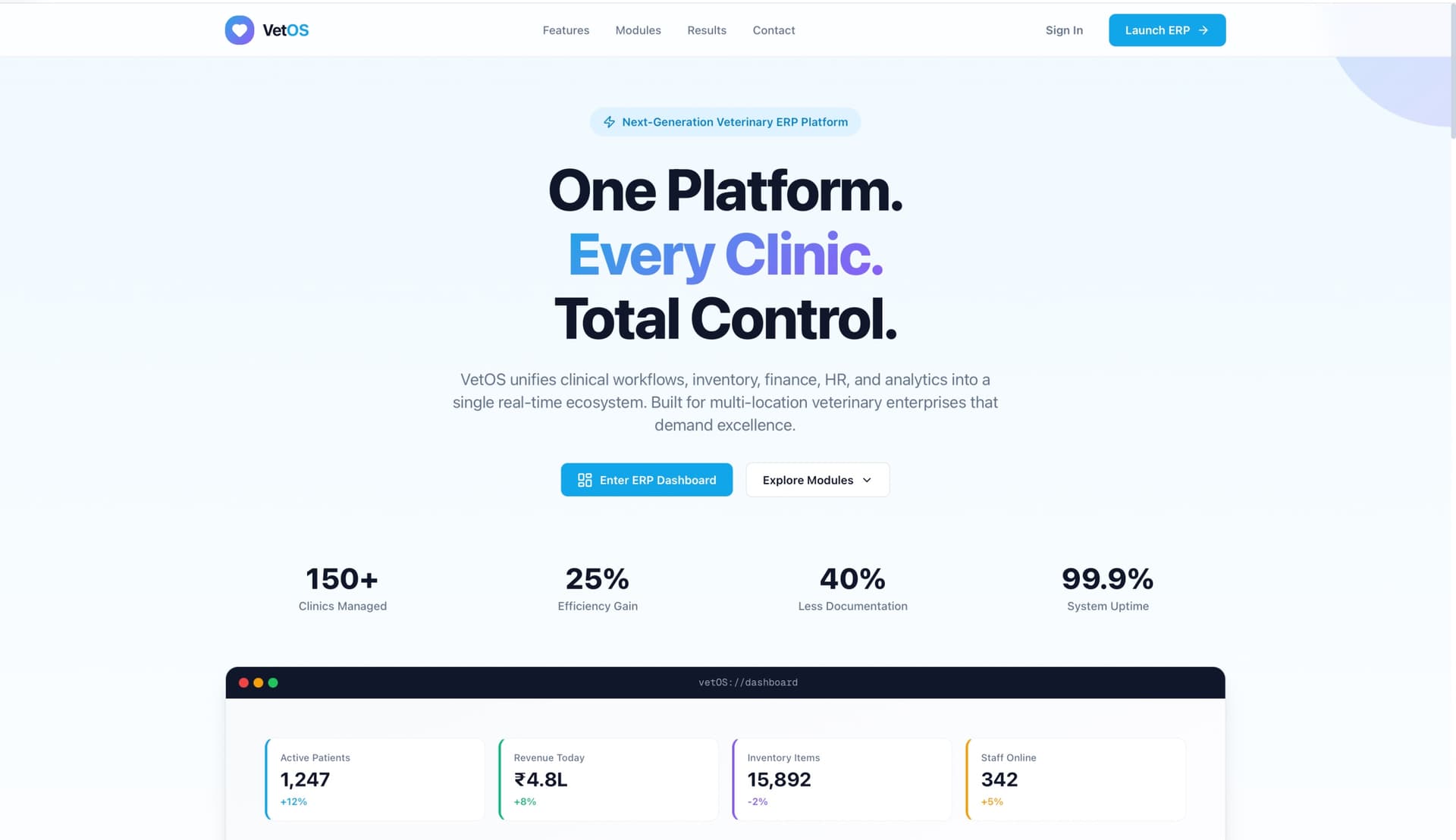
Health Care⭐ Featured
Medical ERP | Vet Medical Version
VetOs
Challenge
Executive Summary
VetGlobal Enterprise is a multinational veterinary corporation operating 150 general practices, 15 specialty referral hospitals, and a pharmaceutical supply division across North America and Europe. Faced with fragmented legacy systems, inefficient inventory management, and growing administrative burdens, the leadership team recognized the need for a unified, intelligent, and scalable ERP platform. Rather than adapting off-the-shelf solutions, VetGlobal chose to build a custom system using Next.js and Firebase—a modern, serverless technology stack that promised rapid development, real-time capabilities, and effortless scaling.
The resulting platform, named VetOS, integrates every facet of the business—from clinical workflows to corporate finance—into a single, real-time ecosystem. Within 18 months of rollout, VetGlobal achieved a 25% increase in operational efficiency, a 30% reduction in inventory holding costs, and a 40% decrease in documentation time for veterinarians. This case study details the challenges, the solution architecture, the advanced features of each module, and the transformative results delivered by this purpose-built ERP.
The Challenge:
VetGlobal’s growth had outpaced its legacy infrastructure. The organization faced a common set of challenges among large veterinary groups:
Data Silos: Each clinic used a different practice management system (PMS), making it impossible to get a consolidated view of operations, finances, or patient outcomes.
Inventory Waste: Pharmaceuticals and supplies were managed locally, leading to overstocking, expiries, and frequent emergency orders. No enterprise-wide visibility existed.
Administrative Overload: Veterinarians spent up to 30% of their time on manual data entry, documentation, and billing, reducing time with patients.
Inefficient Reporting: Financial consolidation across 165 locations required days of manual work, and business intelligence was limited to static, outdated reports.
Scalability Concerns: Legacy systems could not support the company’s aggressive acquisition strategy or the demand for mobile and client-facing applications.
The IT team evaluated several commercial ERP solutions but found them either too rigid, prohibitively expensive, or lacking deep integration with veterinary-specific workflows. The decision was made to build a custom ERP that would be truly fit for purpose, leveraging modern cloud technologies to ensure agility, real-time data, and low total cost of ownership.
Results & Key Benefits
Within 3 months of full deployment, VetGlobal realized significant quantitative and qualitative improvements:
| Metric | Before | After | Improvement |
|---|---|---|---|
| Inventory Holding Costs | $4.2M | $2.9M | 30% reduction |
| Inventory Expiry Waste | 8% of stock | 2% of stock | 75% reduction |
| Vet Documentation Time | 90 min/day | 54 min/day | 40% reduction |
| Finance Consolidation Time | 5 days | 30 minutes | ~99% faster |
| Client No-Show Rate | 12% | 8% | 33% reduction |
| IT Infrastructure Costs | $1.8M/year | $0.9M/year | 50% reduction |
Additional benefits:
Real-time visibility: Corporate leaders can now monitor any clinic’s performance live.
Scalability: Onboarding a new clinic takes days instead of weeks; the system automatically scales.
User satisfaction: 92% of veterinarians reported that VetOS reduced their administrative burden, allowing more focus on patient care.
Innovation enablement: The Next.js/Firebase stack allows the internal team to experiment and deploy new features weekly.
7. Conclusion
By building a custom ERP on Next.js and Firebase, VetGlobal Enterprise not only solved its immediate operational challenges but also created a platform for continuous innovation. The serverless, real-time architecture proved ideal for the dynamic, multi-location nature of modern veterinary practice. The case demonstrates that with the right technology choices, even highly specialized industries can achieve the agility and intelligence typically reserved for tech-native companies.
VetGlobal now plans to extend VetOS with telemedicine capabilities (using WebRTC and Firebase) and integrate wearable device data from pets, further cementing its position as a leader in data-driven veterinary care.
View Details
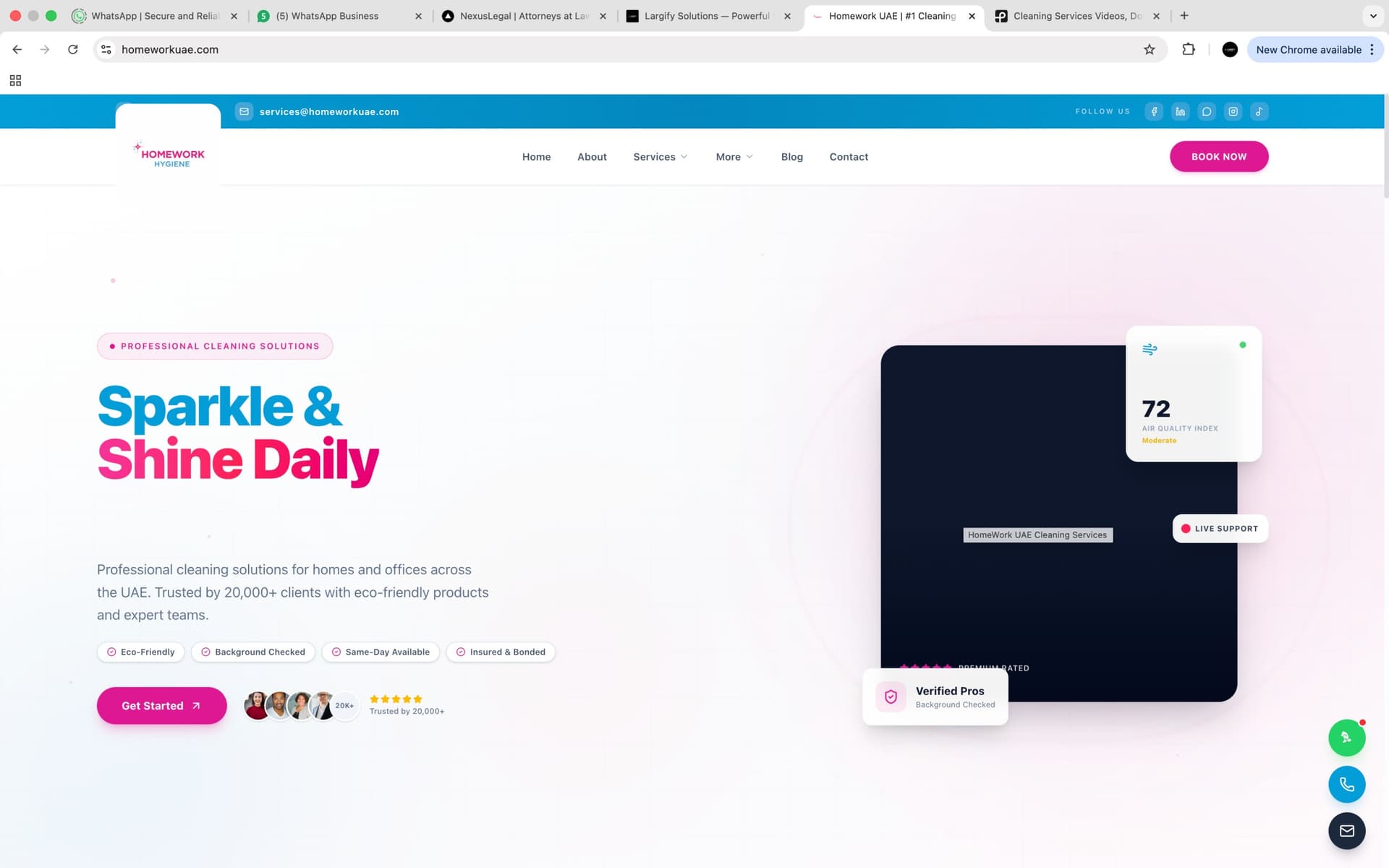
Cleaning Company
Digital Booking System and Multi Portal Dashboard
Homework UAE
Challenge
HomeworkUAE required a structured, high-converting website to strengthen its credibility in the academic services industry and increase student inquiries. Their objective was clear: create a professional, trust-driven platform that clearly communicates services, builds authority, and converts visitors into paying clients.
Before optimization, HomeworkUAE faced:
Lack of strong trust signals and authority positioning
Overcrowded content structure
Weak service hierarchy
Unoptimized call-to-actions
Limited mobile experience optimization
Low inquiry-to-visitor conversion
In a competitive academic market, credibility and clarity are critical. The website needed to instantly build trust while guiding students toward placing orders.
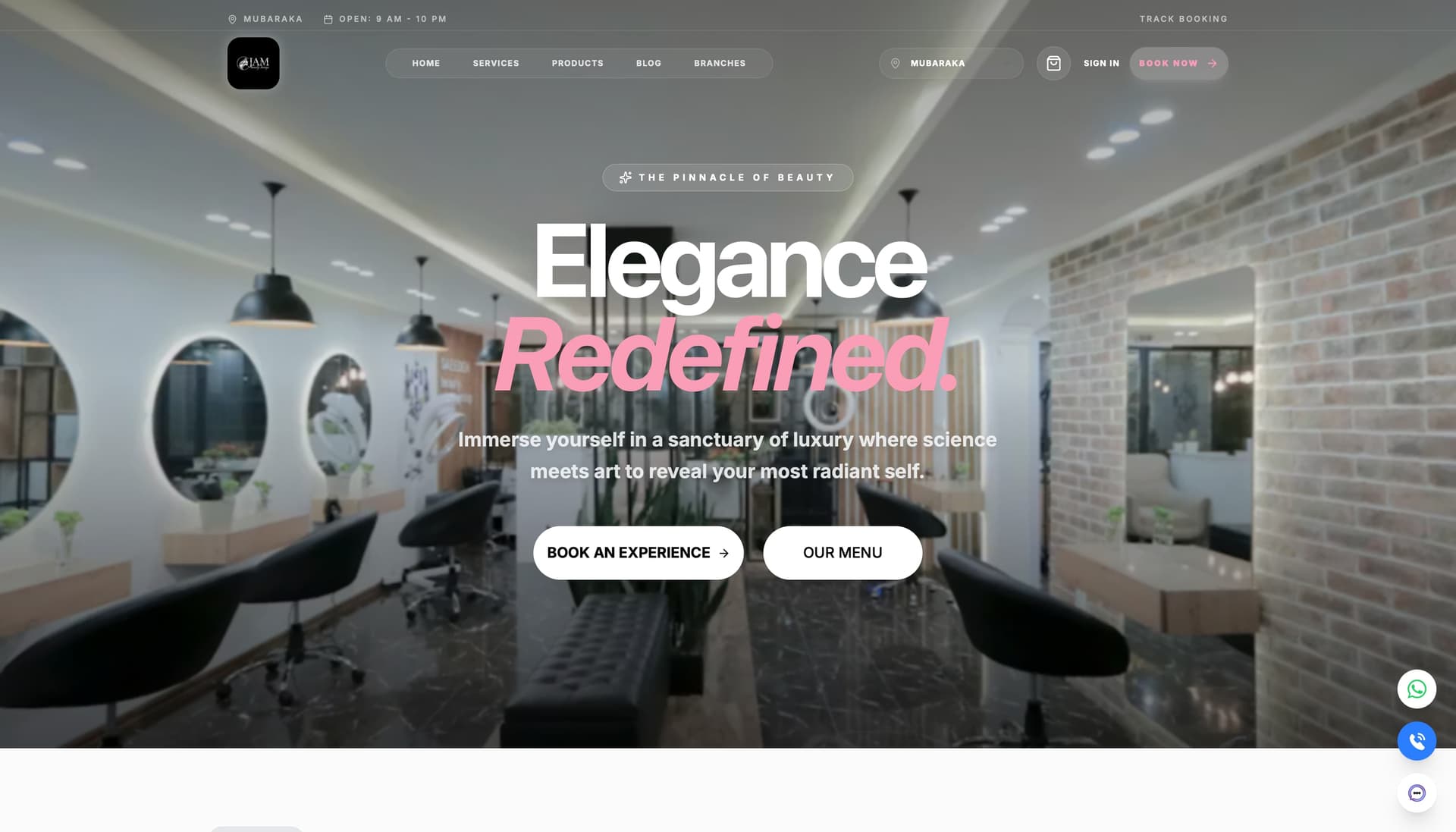
Fashion & Beauty⭐ Featured
Jam Beauty Lounge — Digital Transformation & Lead Growth
Jam Beauty Lounge
Challenge
Project Background:
Jam Beauty Lounge wanted to strengthen its digital presence and attract more premium clients through online channels.
Their existing setup lacked a clear brand identity, strong visuals, and a structured way to convert online visitors into actual bookings.
The goal was simple but important:
Create a polished digital experience that reflects the lounge’s luxury services and increases customer inquiries and appointments.
Challenges Faced:
Before working with Largify Solutions, the client faced several issues:
No strong online brand identity
Limited visibility on digital platforms
Inconsistent design across marketing materials
No optimized flow for customer inquiries and bookings
Low engagement from online visitors
These challenges were directly affecting customer acquisition and growth.
Results & Impact:
After implementation, Jam Beauty Lounge experienced noticeable improvements:
Increased online inquiries and WhatsApp messages
Better customer engagement on digital platforms
Stronger brand perception and professionalism
Improved customer trust before first visit
Higher conversion from visitors to booked clients
The digital presence now reflects the quality of services offered inside the lounge.
Client Outcome:
Jam Beauty Lounge now has a strong, elegant online identity that supports business growth instead of holding it back.
Their website works as a digital receptionist — informing, engaging, and converting visitors into real customers.
link for Demo: https://jam-beauty-lounge-v1.vercel.app/
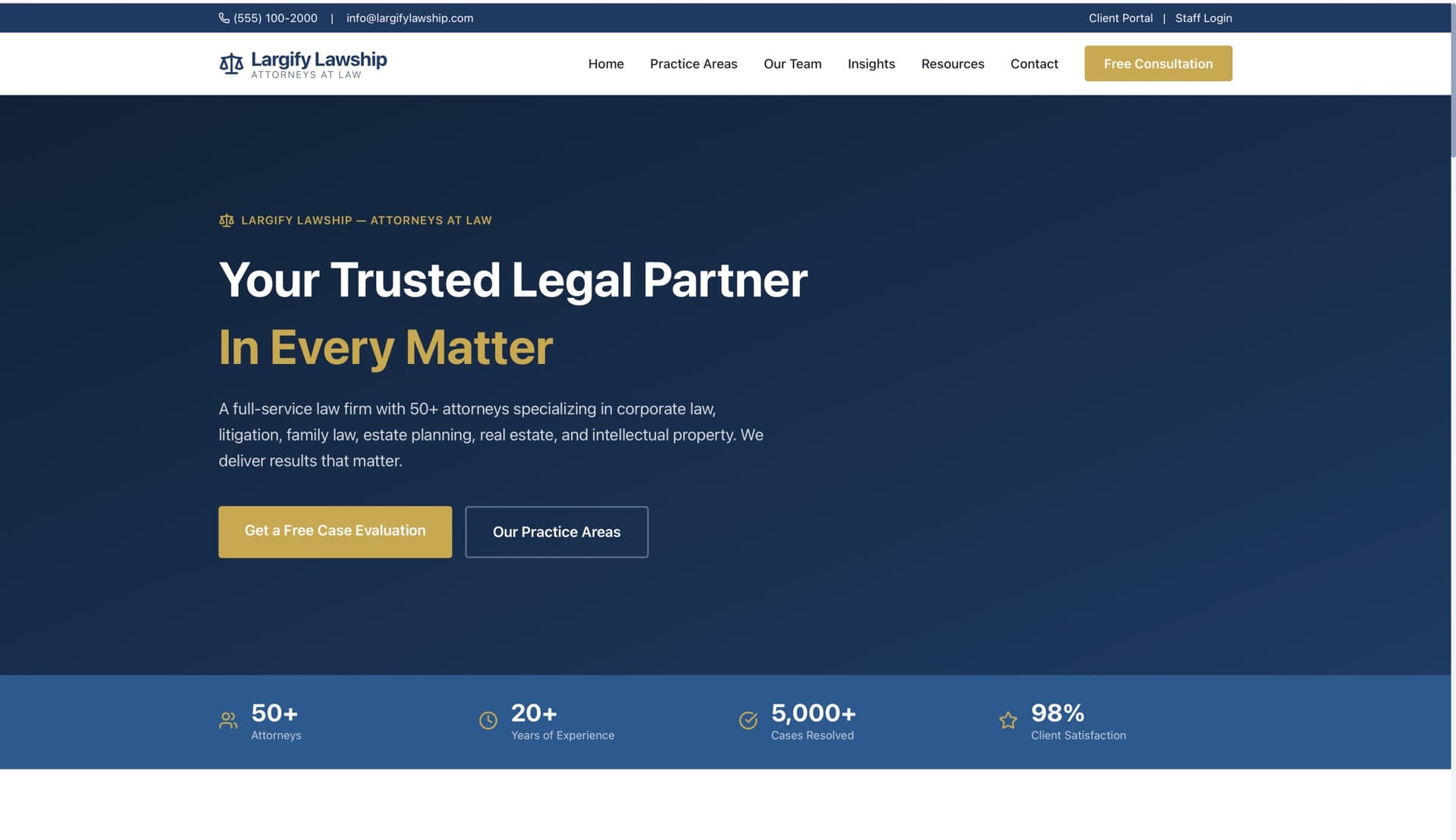
Law and Rules⭐ Featured
Largify Lawship | Complete Law ERP Solutions
Lawship
Challenge
Executive Summary
NexusLegal is a 50-attorney firm with specialties in corporate law, litigation, family law, and estate planning. They were struggling with an outdated website that didn't convert visitors and a disjointed set of legacy software for case management, accounting, and document storage. This caused administrative "toggle tax," lost billable hours, and a poor client experience. They embarked on a project to build a new, client-centric website and implement a unified, AI-powered Advanced ERP system. The result was a 25% increase in new client leads and a 20% increase in realized billable hours within the first year.
Phase 1: The Complete Business Website (The Client-Facing Hub)
The goal was to create a website that establishes credibility, generates business, and extends client service, all while being optimized for both traditional search and new generative AI platforms .
Core Features & Strategy
1. Strategic Foundation & AI Visibility
Beyond the Brochure: The website was designed not just as an online brochure, but as a hub for all marketing efforts and a primary tool for business generation .
AI Optimization: Recognizing that potential clients now use tools like ChatGPT for recommendations, NexusLegal structured its content with clear, direct language, descriptive headings (H2, H3), and TL;DR summaries. This helps AI systems easily parse the firm's expertise and recommend its attorneys .
Building Trust: The site prominently features a widget with live feeds from Google Reviews and Avvo, showcases awards, and details attorney credentials to build immediate trust with high-stakes clients .
2. User-Centric Design & Navigation
Intuitive Information Architecture: Services are organized logically. For example, "Family Law" is a main category, with sub-pages for "Divorce," "Child Custody," and "Adoption," making it easy for users and search engines to navigate .
Attorney Profiles: These are not just CVs. Each profile features a professional headshot, a medium-length bio that speaks to the attorney's experience and personality, contact info, and links to their published articles. This page is often the most visited part of the site .
Mobile-First & Accessibility: The site is fully responsive and adheres to WCAG guidelines, with features like screen reader compatibility and keyboard navigation, ensuring it is usable by everyone .
3. Compelling Content & Calls to Action
Dedicated Service Pages: Each practice area has its own comprehensive page that answers potential client questions, rather than lumping all information onto one page .
Thought Leadership Blog: A regularly updated blog with in-depth articles supports key service pages through internal links, establishing authority and improving SEO rankings .
Clear Calls to Action (CTAs): Generic "Contact Us" buttons were replaced with action-oriented prompts like "Get a Free 15-Minute Case Evaluation" or "Download Our Estate Planning Guide." CTAs are placed strategically throughout the content .
Resource Center: A library of educational materials (articles, videos, FAQs) helps potential clients understand their legal situation and demonstrates the firm's expertise .
4. Functionality & Client Conversion
Multiple Contact Options: Understanding that clients have different communication preferences, the site prominently displays a phone number, offers a simple contact form, and includes a live chat option staffed by real people during business hours .
Online Scheduling: Integrated calendar functionality allows potential clients to schedule an initial consultation directly, reducing friction in the conversion process.
Client Portal Login: A secure, branded portal gives existing clients 24/7 access to case documents, messages, and invoices, extending great client service online .
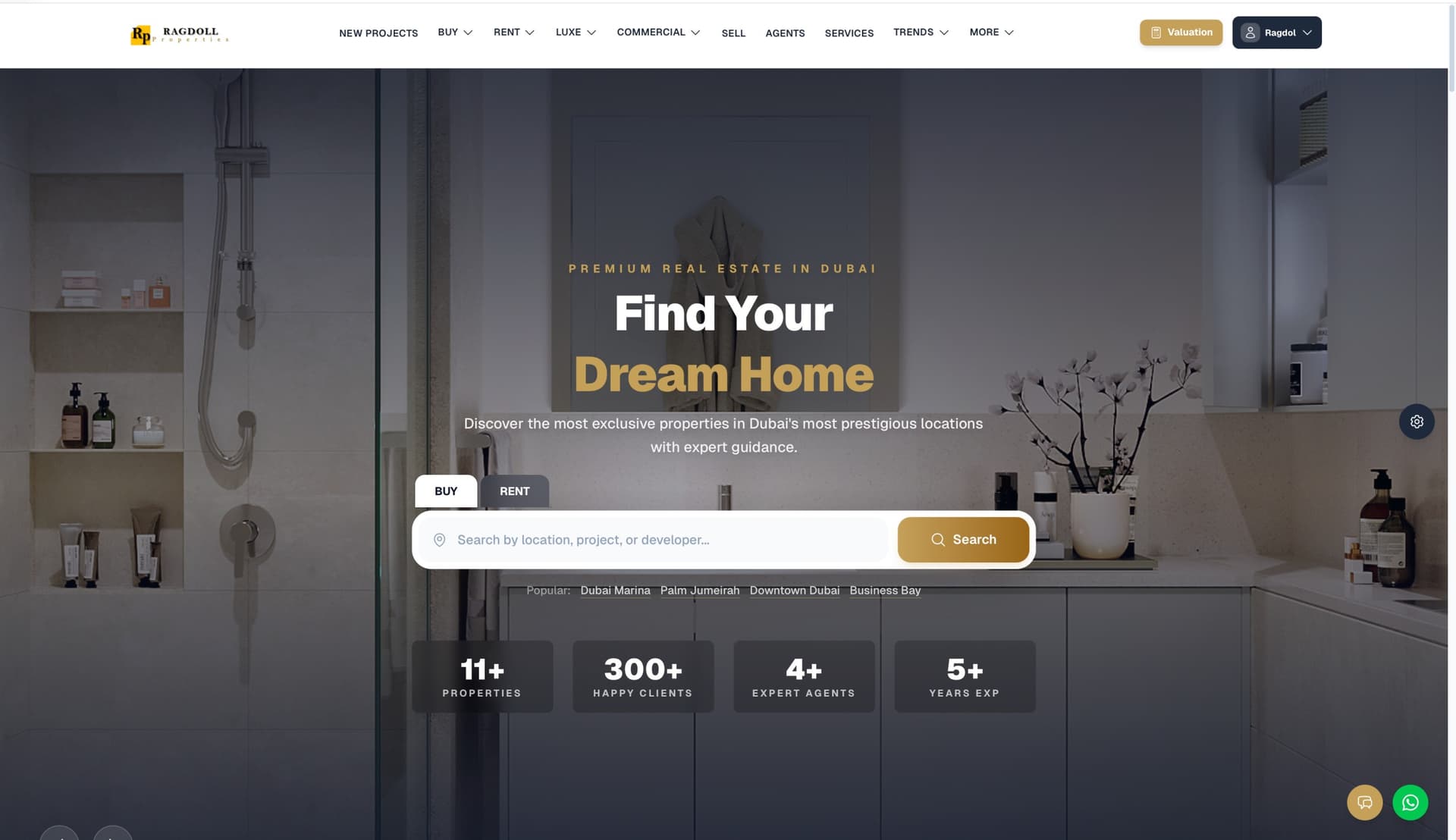
Real Estate
Multi-Portal Real Estate Platform
Ragdol Properties
Challenge
The Challenge
Before development, the business faced:
● No centralized property management system
● Manual client handling process
● No structured admin control panel
● Lack of user dashboards
● Unorganized property listings
● Limited automation in inquiry handling
The company needed a unified digital infrastructure to manage listings, users, and client interactions efficiently.
● No centralized property management system
● Manual client handling process
● No structured admin control panel
● Lack of user dashboards
● Unorganized property listings
● Limited automation in inquiry handling
The company needed a unified digital infrastructure to manage listings, users, and client interactions efficiently.
Results & Impact
After deployment, Ragdol Properties experienced:
● 45% improvement in inquiry handling efficiency
● 35% faster internal property management process
● Increased engagement on property detail pages
● Centralized control over listings and users
● Improved operational transparency
The platform now functions as both a marketing engine and an operational management system.
After deployment, Ragdol Properties experienced:
● 45% improvement in inquiry handling efficiency
● 35% faster internal property management process
● Increased engagement on property detail pages
● Centralized control over listings and users
● Improved operational transparency
The platform now functions as both a marketing engine and an operational management system.
View Details
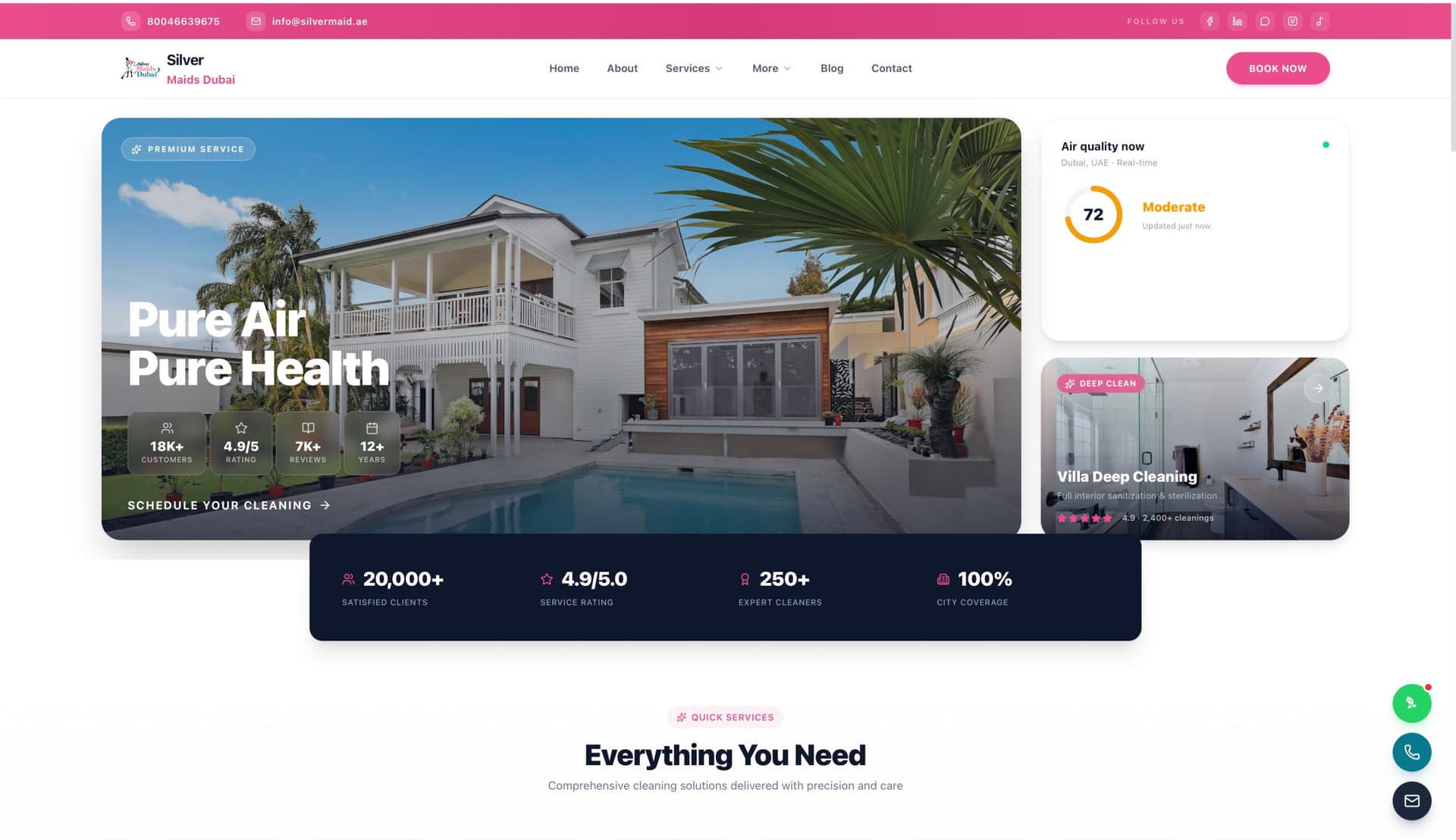
house cleaning
Business Website with Integrated Job Management System
Silver Maid
Challenge
The Challenge
The business lacked a centralized digital system to manage:
● Service bookings ● Staff assignments
● Job execution tracking
● Administrative monitoring
● Client service visibility
Operations relied heavily on manual coordination, which limited scalability and efficiency.
The business lacked a centralized digital system to manage:
● Service bookings ● Staff assignments
● Job execution tracking
● Administrative monitoring
● Client service visibility
Operations relied heavily on manual coordination, which limited scalability and efficiency.
Results & Impact
After launch:
● Faster service booking processing
● Improved job assignment efficiency
● Centralized operational control
● Better coordination between admin and staff
● Stronger professional digital presence
The platform now functions as both a business website and operational management system, supporting growth and scalability.
After launch:
● Faster service booking processing
● Improved job assignment efficiency
● Centralized operational control
● Better coordination between admin and staff
● Stronger professional digital presence
The platform now functions as both a business website and operational management system, supporting growth and scalability.
View Details
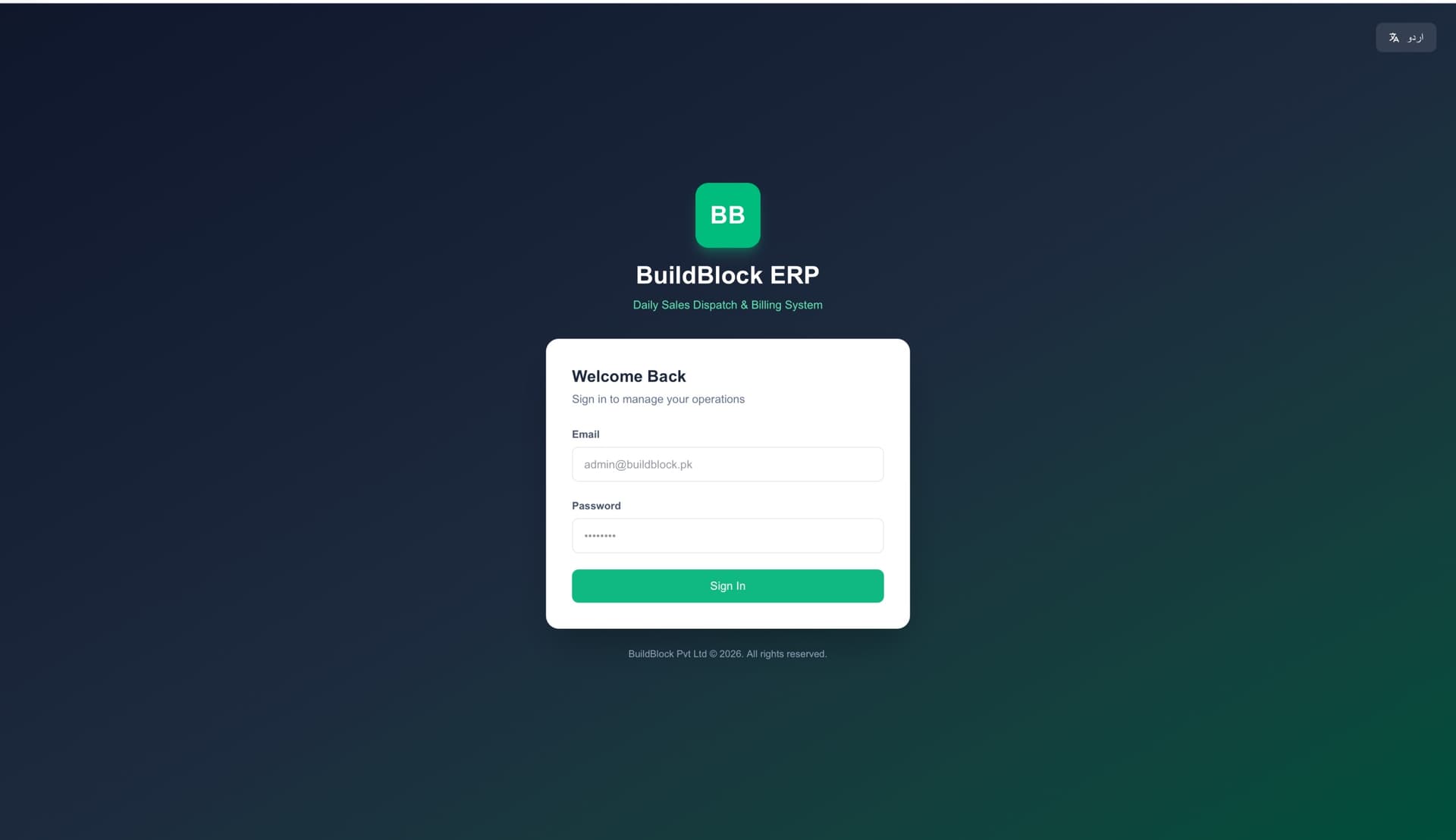
For All - Operations Dealing⭐ Featured
Operation Management System
Largify Product
Challenge
1. Introduction
BuildBlock Pvt Ltd is a leading manufacturer and supplier of concrete blocks in the Punjab region of Pakistan. With a growing network of over 150 dealers spread across major cities, the company dispatches thousands of blocks daily. The sales operations involve recording daily dispatches, managing diverse billing cycles (daily and monthly), tracking customer payments, maintaining ledgers, and analyzing profitability. Before implementing the new ERP system, BuildBlock relied on manual Excel sheets and paper registers, leading to data entry errors, delayed billing, and difficulty in tracking outstanding payments. The management recognized the need for a robust, user-friendly system that could streamline operations, provide real-time insights, and accommodate the linguistic preferences of their Urdu-speaking staff.
2. Challenges Faced
Manual Dispatch Tracking: Daily dispatches for each dealer were recorded in separate Excel files. Consolidating data from the 1st to the 30th of the month was time‑consuming and prone to errors.
Complex Billing Requirements: The company served two types of customers – those requiring daily bills and those preferring a single monthly bill. Managing these two billing cycles manually led to missed invoices and delayed revenue recognition.
Ledger Management: Maintaining individual customer ledgers with daily transactions, payments, and outstanding balances was cumbersome. Reconciliation with bank statements often took days.
Cash and Bank Payments: Recording cash receipts and bank transactions across multiple vendors lacked standardization, making it difficult to track payables and vendor balances.
Profitability Analysis: Without a real‑time costing sheet, management could not monitor daily sales, costs, and profits, hindering timely decision‑making.
Language Barrier: Many field staff and dealers were more comfortable with Urdu, while the existing Excel sheets were entirely in English, causing misinterpretation and errors.
Data Exchange Limitations: Importing and exporting data between departments required manual re‑entry, as Excel files were not consistently formatted.
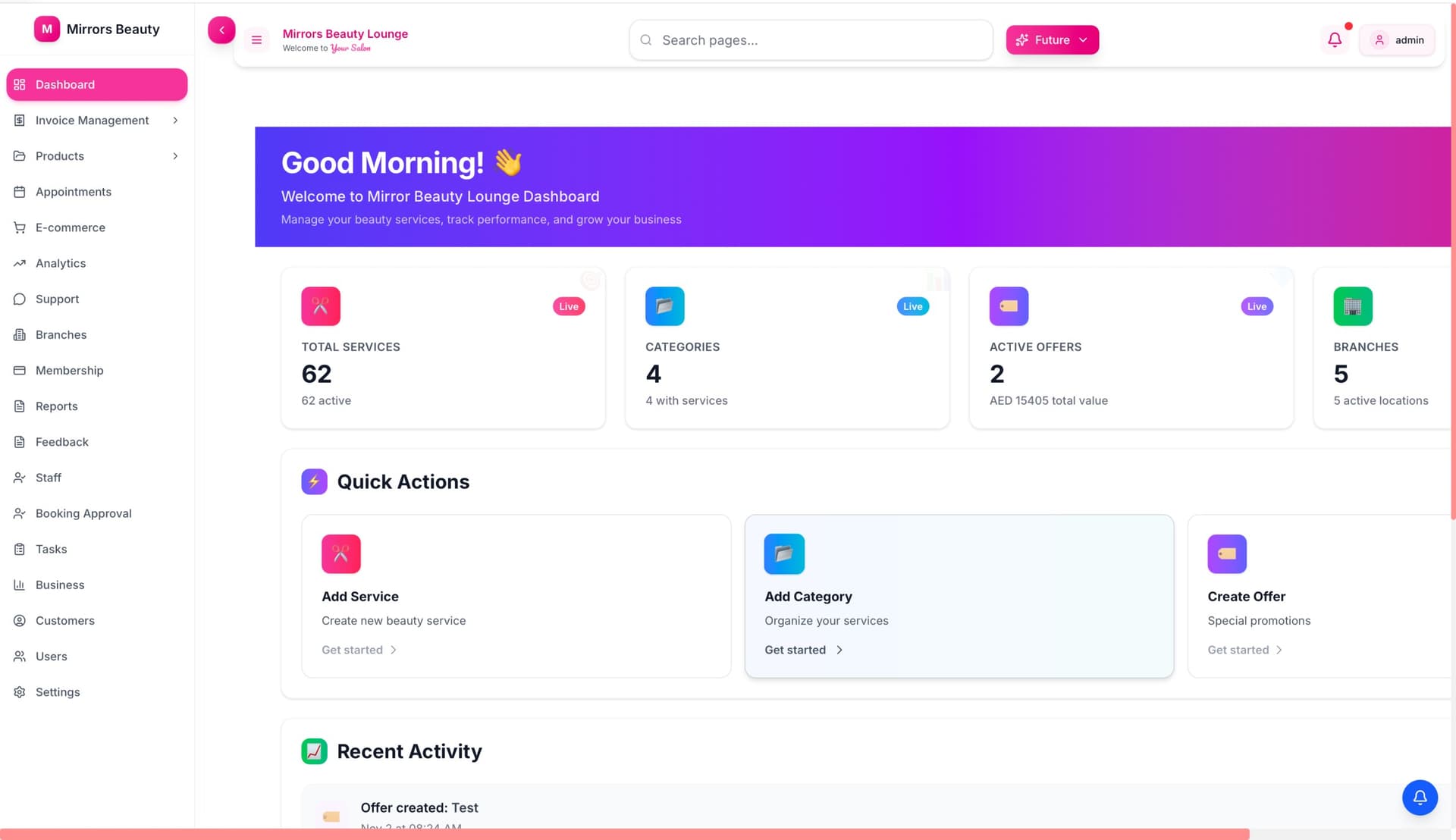
Internal Management system
Internal Operations & Access Management System
Mirrors Beauty Lounge
Challenge
The Challenge
Before implementation, the organization faced:
● Fragmented internal workflows
● Limited centralized system access
● No structured role-based permissions
● Manual or semi-digital coordination
● Lack of dashboard visibility for decision-making
There was a strong need for a controlled digital infrastructure that improves efficiency while maintaining strict access security.
Before implementation, the organization faced:
● Fragmented internal workflows
● Limited centralized system access
● No structured role-based permissions
● Manual or semi-digital coordination
● Lack of dashboard visibility for decision-making
There was a strong need for a controlled digital infrastructure that improves efficiency while maintaining strict access security.
Results & Impact
Post-deployment improvements included:
● Increased operational transparency
● Improved task handling efficiency
● Secure and structured system access
● Better internal coordination
● Centralized monitoring capability
The platform now acts as a secure internal control system supporting daily operations.
Post-deployment improvements included:
● Increased operational transparency
● Improved task handling efficiency
● Secure and structured system access
● Better internal coordination
● Centralized monitoring capability
The platform now acts as a secure internal control system supporting daily operations.
View Details

Ecommerce
ECOMMERCE WEBSITE WITH ADMIN PORTAL
The British Linen
Challenge
The Challenge
Before development, the business faced:
● No structured online selling platform
● Limited product organization
● Manual order handling process
● No centralized admin control system
● Lack of inventory visibility
● Unoptimized mobile shopping experience
They needed a scalable digital store that could handle growth and streamline operations.
Before development, the business faced:
● No structured online selling platform
● Limited product organization
● Manual order handling process
● No centralized admin control system
● Lack of inventory visibility
● Unoptimized mobile shopping experience
They needed a scalable digital store that could handle growth and streamline operations.
Results & Impact
After launch, the platform achieved:
● Streamlined order processing workflow
● Improved mobile shopping experience
● Centralized inventory & order management
● Faster product update cycles
● Enhanced customer purchase journey
The system now operates as a fully structured online retail platform with integrated backend control.
After launch, the platform achieved:
● Streamlined order processing workflow
● Improved mobile shopping experience
● Centralized inventory & order management
● Faster product update cycles
● Enhanced customer purchase journey
The system now operates as a fully structured online retail platform with integrated backend control.
View Details
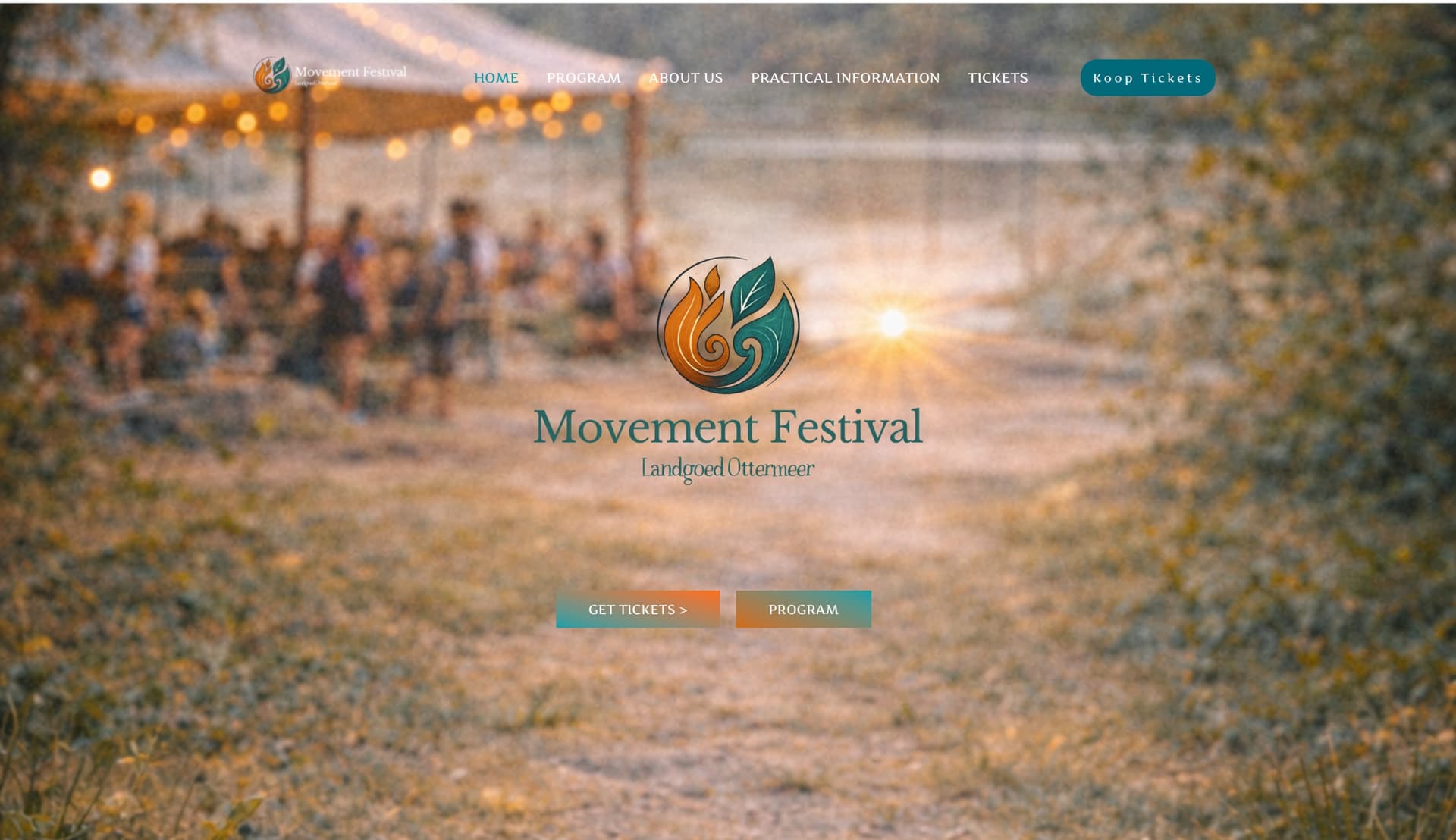
Event Management
Event Website with Integrated Booking Platform
Movement Festival
Challenge
The Challenge
Before digital restructuring, the event faced:
● Limited centralized booking management
● Manual or semi-digital attendee coordination
● No optimized ticket purchase journey
● Inconsistent mobile booking experience
● Lack of structured event presentation
In a competitive festival market, user experience and booking simplicity directly impact ticket sales.
Before digital restructuring, the event faced:
● Limited centralized booking management
● Manual or semi-digital attendee coordination
● No optimized ticket purchase journey
● Inconsistent mobile booking experience
● Lack of structured event presentation
In a competitive festival market, user experience and booking simplicity directly impact ticket sales.
Results & Impact
After launch:
● 35% improvement in booking completion rate
● Faster mobile ticket purchases
● Centralized attendee data management
● Reduced manual coordination efforts
● Improved event information clarity
The platform now operates as a structured digital hub for event promotion and ticket management.
After launch:
● 35% improvement in booking completion rate
● Faster mobile ticket purchases
● Centralized attendee data management
● Reduced manual coordination efforts
● Improved event information clarity
The platform now operates as a structured digital hub for event promotion and ticket management.
View Details
10+
Successful Projects
300%+
Average ROI Growth
50+
Happy Clients